- Java Virtual Machine is the name that Java Runtime Environment was known for a time. There are plenty of websites that make use of Java technology to enrich the experience of visitors; from banks websites, to video games webpages, all of them require Java to function properly.
- Java SE Runtime Environment 8 Downloads. Do you want to run Java™ programs, or do you want to develop Java programs? If you want to run Java programs, but not develop them, download the Java Runtime Environment, or JRE™.
This page tells you how to download and install Java 8 and Eclipse on Mac OS X, and how to configure Eclipse.
Execute as script file or separate commands, run installer, done! (for sources and docs on Mac either download the Java-Developer-Package (found in the Developer Area on apple.com) or directly from Oracle and install yourself). Download Free Java here. After the download completes, run the installer and follow the steps. After the download completes, click on the downloaded.dmg file. Drag the gephi application in your Application folder. Update your distribution with the last official JRE 7 ir 8 packages. After the download completes, unzip and untar.
Installing Java 8
Go to the Oracle website. You'll see something like this:
Scroll down until you see a heading beginning 'Java SE 8u65/8u66.' On the right, you'll see a Download button under the JDK header. Click it. The next screen will look like this:
Click the radio button next to 'Accept License Agreement' and then click on jdk-8u65-macosx-x64.dmg. You'll be asked whether to save the file that is going to be downloaded; click on Save File.
Open your Downloads folder, and double-click on jdk-8u65-macosx-x64.dmg. You'll see this window:
Double-click on the package icon, and follow the instructions to install. When the installation has completed, click on Done. At this point, you may close up the window and drag jdk-8u65-macosx-x64.dmg to the Trash.
Installing Eclipse
If you already have Eclipse installed on your Mac, you need to get rid of it. To do so, first quit Eclipse if you're currently running it. Then, go to your workspace folder (probably in Documents/workspace) and save anything there that you want to keep, because you're about to get rid of this folder. Next, drag the workspace folder to the Trash.
Go to your Applications folder. One way to get there is, from the Finder, type command-shift-A. You'll a folder named eclipse in there; drag the eclipse folder to the Trash. If you have an Eclipse icon in your dock, remove it from the dock.
Now you're ready to download and install the newest version of Eclipse. Go to this website. You'll see a window like this:
Scroll down until you see 'Eclipse IDE for Java Developers' and click where it says 64 bit under Mac OS X.
You will see this window:
Click on the yellow download button. If asked, click on 'Open with Archive Utility (default)' and then click OK. The download might take a few minutes. You should not feel compelled to donate.
After the download completes, folders should automatically expand. If they don't, double-click on the .tar file. When that's done, you should see a folder named eclipse in your Downloads folder. When you open your Downloads folder, if you see Applications under the Favorites on the left side of the window, you should drag the eclipse folder into Applications. If you don't see Applications, then open a new window for Applications (from the Finder, command-shift-A), and drag the eclipse folder into Applications.
Open your Applications folder, and then open the eclipse folder. You'll see an item named Eclipse; if you like, drag its icon into the dock so that you'll be able to launch Eclipse easily.
Launch Eclipse. If you're asked whether you want to open it, of course you do; click Open. You'll see a window like this:
It will have your user name rather than mine (scot). Select where you want your workspace to be; I recommend the default of your Documents folder. Click the checkbox for using this location as the default, and then click OK.
You'll see a window like this:
Click on the Workbench arrow in the upper right that I've circled. You shouldn't see this screen again, even if you quit Eclipse and relaunch it.
You'll get an empty workbench like this:
We won't be using the 'Task List' and 'Connect Mylyn' windows. Click the 'x' on each to close it. Press the mouse on the Window menu item, then choose 'Perspective', and finally choose 'Save Perspective as..'. Enter 'cs10' for the name of this perspective and press return. Your workbench will now look like this:
You have now installed Eclipse!
Configuring Eclipse
You don't have to configure Eclipse the way I do, but you'll probably avoid some confusion if you do. Here's how.
In the Eclipse menu bar, click on the Eclipse menu and then on 'Preferences..'. You'll see a window with two panes. On the left pane is a list of types of things you can configure.
Click on the triangle to the left of General. Then click on the triangle to the left of Appearance. Then click on 'Colors and Fonts.' You should see a window like this:
In the window in the middle, click on the triangle next to Java. Then double-click on 'Java Editor Text Font':
You'll see this window:
On the right, where you can select the size, click 12. Then close this window by clicking on the window's close button.
Close up the General preferences by clicking on the triangle to the left of General. Click the triangle next to Java and then click the triangle next to 'Code Style.' Then click Formatter. Here's what you should see:
Click the button that says 'New..'. You'll see a window such as this one:
You can type in any profile name you like. I used 'CS 10':
Click OK.
You should see a window like this:
Change the tab size to 2:
You'll see that the indentation size automatically changes as well.
Click on 'Blank Lines,' and after 'Between import groups' and 'Before declarations of the same kind,' change the values 1 to 0:
Click on 'Control Statements,' and check the first four boxes as I've done here:
Click OK.
Now click on triangles to close up Java. Click on the triangle next to Run/Debug, and then click on Console:
Click on the green color sample next to 'Standard In text color.' You'll get a color picker:
Slide the slider on the right down, so that you get a dark green. (You're at Dartmouth. What other color could you possibly want?)
Close the color picker window by clicking its close button, and click OK again to close the Preferences window.
And you're done!
Java is one of the most used programming languages for backend and creating different type of applications ( web application, mobile applications, desktop applications, and many more). It supports all the major operating systems such as Windows, Linux, Solaris, and MacOS. In this topic, we will see how to install Java on mac and its different variations.
Before proceeding further, let’s have a look at the quick index of the topic:
System Requirements to install Java on mac
The system requirements and considerations for installing the JDK and the JRE on macOS are as following:
Important points to be considered while installing Java on MacOS:
A computer running macOS and having administrator privileges.
Java can not be installed for a single user instead it is installed systemwide for all users.
The JDK package contains JRE by default. However, the current JRE version will not be replaced with the lower version of JRE.
Installing the JRE will not contain the JVM or other Java libraries for creating applications. It can only be used to run the Java apllications. See the difference between JRE, JDK, and OracleJDK.
Hardware requirements:
The following requirements should be meet to install Java 7 or later versions:
- Intel-based Mac running versions 10.7.3 and above
- Administrator privileges
- A 64-bit browser (e.g., Safari)
- 32-bit browsers do not support Java 7 and later versions on the Mac platform
Determining the JRE Version Installed on macOS
There can be only one JRE version on the system. Installing the JRE will replaces the previous version. However, it will not replace with the older versions.
The JRE version can be determned by the following ways:
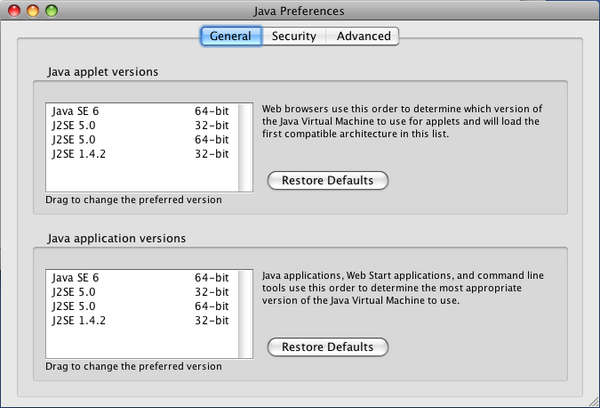
Visit System Preferences->Other section->Java . This will start the Java Control Panel, after this, click on About to display the version information.
Or,
Enter the following command on terminal:
The above command will display the installed Java version.
Determining the Default JDK Version on macOS
To start a Java application, the system uses the default JDK version. It is possible JRE may have the a different version that the JDK.
There can be multiple versions of the JDK, but, the JRE version can be only one (latest).
To determine the installed Java version, execute the below command:
The above command will display the output something like this ( for Java 10):
To change the default version version of Java, either specify the full path, or use the java_home tool as follows:
Installing the JDK on macOS
The JDK package by default contains the associated JRE versions. The JavaFX SDK and Runtime are also packaged into the standard JDK package.
Download photos onto an macbook air from a thumb drive. Follow the below steps to install Java on MacOS:
Install Java 8 Mac
Step1:
Download the JDK .dmg file from Here, or by executing the below command:
before downloading the file you must accept license agreements.
Step2:
After the successfull Double click on the ‘.dmg’ file to start the installation process.
Step3:
Next, you will see a finder window having the name of the ‘.pkg’ file. Click on the ‘.pkg’ file to proceed the installation process:
Step4:
In this step, you will see a Introduction window, click Continue.

Step5:
You will see a installation type window, Click Install to continue.
Step6:
In this step you will see a window having a message “Installer is trying to install new software”. Type your administrator password to allow this.
Step7:
Enter the Administrator user name and password and click Install Software.
The downlaoded Java version is installed on your machne and confirmation window is displayed.
Installing the JRE on macOS
Follow the below steps to install the JRE on an macOS platform:
Step1:
Download the JRE .dmg file, by executing the below command:
Accept the license agreement.
Step2:
Next, double-click on the .dmg file and launch it.
Step3:
In this step, you will see a finder window appears having ‘.app’ file.
Step4:
Double-click on the Java 10.app icon, it will start the installation process.
Step5:
The installation process will display the Welcome window, Click Next to continue the process.
Step6:
Hence, the downloaded JRE version is installed and a confirmation window is displayed. Click Close to complete the process.
Installing By Homebrew
To install By Homebrew package manager, follow the following steps:
Step1: Install Homebrew and update it, and download openJDK package by executing the below commands:
Step2: Find all available JDK versions by executing the below command:
 Having found your 041-XXXXX number, download the BootCampESD.pkg url that has your number in it. I try to keep the page at bootcamp-driver-download up to date with all the pkg download URLs. Be patient as it's probably 600MB. Once your pkg is downloaded, double click it and install to a folder on your hard drive so you know where to find it. Boot Camp supports 64-bit versions of Windows 10 when used with a supported Mac. It is highly recommended to always use the most recent driver version available. Try to set a system restore point before installing a device driver. The keyboard and mouse or trackpad that came with your Mac. If they aren’t available, use a USB keyboard and mouse. A full-installation, 64-bit version of Windows 10 on a disk image (ISO file) or other installation media.
The output will be something like this:
Step3: Select Java versions like Java 8, 9, 10, 11, 12, 13 by executing the one of the following commands:
Step4: for example to install Java 8 and 11, execute the below commads:
brew cask install adoptopenjdk8
brew cask install adoptopenjdk11
Step5:
To display the loaction where Java is installed, execute the below command:
The above command will display the output something like this:
Homebrew will install the JDK at Mac’s standard folder for Java “/Library/Java/JavaVirtualMachines/”.
Step6:

Verify the installation, by executing the below command:
The output will be as:
By default, Mac takes the Higher version of Java.
Download Java 8 For Mac
Version Switching
Adobe acrobat pro xi mac installer. To change the default version of Java create or edit the “~/.bash_profile” with the text editor of your choice like vim or nano, export JAVA_HOME variable to the specified JDK we want to use on Mac.
Execute the below command:
Update the file as:
~/.bash_profile:
The above script will make the Java 8 as default Java version.
Uninstalling the JDK on macOS
To uninstall the JDK on macOS, Navigate to “/Library/Java/JavaVirtualMachines”. Remove the directory whose name matches the following format:
For example, to uninstall Java 10, execute the below command:
Install Java For Mac
Note: Do not try to uninstall Java by removing the Java tools from /usr/bin. This directory is part of the system software and any changes will be reset by Apple the next time that you perform an update of the OS.
Uninstalling the JRE on macOS
To uninstall JRE, Navigate to “/Library/Internet Plug-Ins”. From here, remove the JavaAppletPlugin.plugin directory.
Now, navigate to “/Library/PreferencePanes”.
Remove JavaControlPanel.prefpane.